
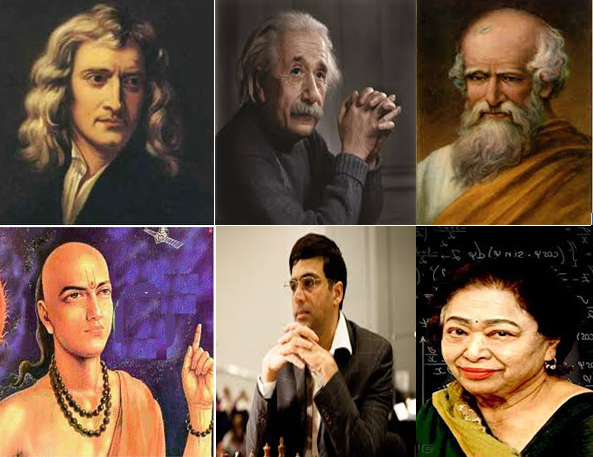
Intelligence has been defined in many ways, the capacity for logic, understanding, self-awareness, learning, emotional knowledge, reasoning, planning, creativity, critical thinking, and problem-solving. More generally, it can be described as the ability to perceive or infer information, and to retain it as knowledge to be applied towards adaptive behaviour’s within an environment or context.
When we hear the word intelligence, the concept of IQ testing may immediately come to our mind. Intelligence is often defined as our intellectual potential, something we are born with, something that can be measured, and a capacity that is difficult to change. Traditionally IQ Test is used as a measuring tool to understand the degree of One’s Intelligence. IQ Test analyses one’s aptitude with regards to Logic, Reasoning & Analytical Skills but does not tell about any other intelligences.
In 1983, Psychologist Dr Howard Gardner, Professor from Harvard University, in his book Frames of Mind introduced the Theory of Multiple Intelligences with some simple but powerful questions revolutionising the Field of Understanding of Intelligences. Are Sportsmen, Artists, Musicians “Intelligent” in their respective disciplines ? IF so why are these and other abilities not accounted for in traditional IQ tests ? Why is the term intelligence limited to just IQ.? From these questions emerged Multiple-Intelligences (MI) Theory. It challenges the psychological definition of intelligence as a general ability that can be measured by a single IQ score.
MI theory describes Nine Intelligences. MI theory asserts that individuals who have a high level of aptitude in one intelligence do not necessarily have similar aptitude in another intelligence. For example, a person who demonstrates an impressive level of Logical Intelligence may be far less skilled when it comes to Natural or Visual Intelligence. It’s important to recognize that this notion stands in sharp contrast to the traditional (and still dominant) view of intelligence as a general ability that can be measured along a single scale and summarized by a single number. This theory suggests that traditional psychometric views of intelligence are too limited. Learning more about the multiple intelligences can help you better understand your own strengths. Continue reading to learn more about the major characteristics of each type of intelligence.
Types of Multiple Intelligence
Logical-Mathematical Intelligence : Number Smart
People who are strong in logical-mathematical intelligence are good at reasoning, recognizing patterns, and logically analyzing problems. These individuals tend to think conceptually about numbers, relationships, and patterns. People with Logical Mathematical Intelligence naturally work better in mathematics, computer-programming and other logical analytical reasoning, scientific thoughts, investigation, and also have ability to undertake complex calculations.This area has to do with logic, abstractions, reasoning, and numbers. While it is often assumed that those with this intelligence naturally excel in mathematics, chess, computer programming and other logical or numerical activities, a more accurate definition places emphasis on traditional mathematical ability and more reasoning capabilities, abstract patterns of recognition, scientific thinking and investigation, and the ability to perform complex calculations. Logical / Mathematical Intelligence enables individuals to use, appreciate and analyze abstract, scientific and mathematical relationships. This capacity is often harnessed in mathematical reasoning and scientific investigations. Mathematicians, Scientists and Engineers deploy this intelligence at high levels.
Strengths
Analyzing problems and mathematical operations
Characteristics
People with logical-mathematical intelligence:
- Have excellent problem-solving skills
- Enjoy thinking about abstract ideas
- Like conducting scientific experiments
- Can solve complex computations
Learns Through
Working with Numbers, Patterns, Graphs & Abstracts. Classifying, Categorizing, etc.
Potential Career Choices
Professions which exhibit a high degree of logical-mathematical intelligence
|
|
|
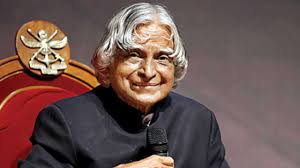
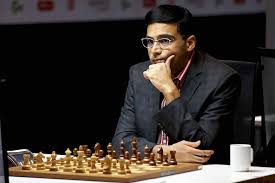
Famous Personalities with Strong Logical Mathematical Intelligence
 |
 |
 |
Linguistic Intelligence : Word Smart
People who are strong in linguistic-verbal intelligence are able to use words well, both when writing and speaking. These individuals are typically very good at writing stories, memorizing information, and reading.Verbal / Linguistic Intelligence allows individuals to communicate and make sense of the world through language.
Those who have a keen sensitivity to language in its spoken and/or written forms might demonstrate this strength as poets, writers, lawyers, public speakers etc.
Strengths
Words, language, and writing
Characteristics
People with linguistic-verbal intelligence:
- Remember written and spoken information
- Enjoy reading and writing
- Debate or give persuasive speeches
- Are able to explain things well
- Use humor when telling stories
Learns Through
Hearing & Seeing Words, Speaking, Reading, Writing, Discussing, Debating, etc.
Potential Career Choices
Professions which exhibit a high degree of linguistic-verbal intelligences are
|
|
|
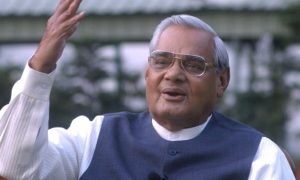
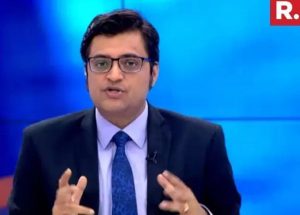
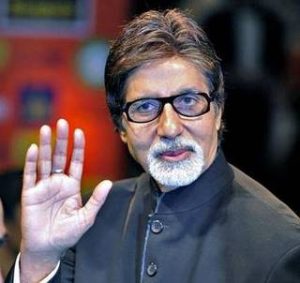
Famous Personalities with Strong Linguistic Intelligence
 |
 |
 |
Intrapersonal Intelligence : Self Smart
Intrapersonal Intelligence is the ability to assess one’s own strengths, weaknesses, talents and interests. It is an ability to use them to set goals and to understand oneself to be of service to others. Individuals who are strong in Intrapersonal Intelligence are good at being aware of their own emotional states, feelings, and motivations. They tend to enjoy self-reflection and analysis, including daydreaming, exploring relationships with others, and assessing their personal strengths. To form and develop concepts/theories based on an examination of oneself and to reflect on one’s inner mood, intuitions and temperament and to use them to create and/or express a personal view.
Strengths
Introspection and self-reflection
Characteristics
People with Intrapersonal intelligence:
- Analyze their strengths and weaknesses well
- Enjoy analyzing theories and ideas
- Have excellent self-awareness
- Understand the basis for his or her own motivations and feelings
Learns Through
Working Alone, Having Space, Reflecting, Doing Self-Paced Projects, etc
Potential Career Choices
Professions which exhibit a high degree of Intrapersonal intelligences are
|
|
|
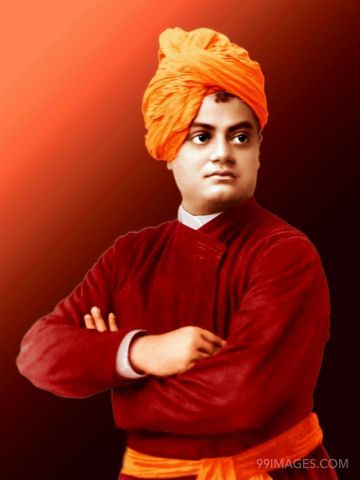
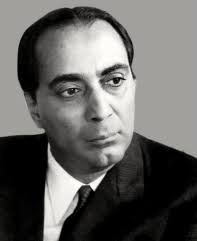
Famous Personalities with Strong Intrapersonal Intelligence
 |
 |
 |
Interpersonal Intelligence : People Smart
Those who have strong interpersonal intelligence are good at understanding and interacting with other people. These individuals are skilled at assessing the emotions, motivations, desires, and intentions of those around them. Interpersonal Intelligence is the ability to organize people and to communicate clearly what needs to be done, to use empathy to help others and to solve problems, to discriminate and interpret among different kinds of interpersonal clues and to influence and inspire others to work towards a common goal.
Strengths
Understanding and relating to other people
Characteristics
People with Interpersonal intelligence:
1. Communicate well verbally
2. Are skilled at nonverbal communication
3. See situations from different perspectives
4. Create positive relationships with others
5. Resolve conflicts in group settings
Learns Through
Comparing, Relating, Sharing, Interviewing, Co-operating, etc.
Potential Career Choices
Professions which exhibit a high degree of Interpersonal intelligences are
|
|
|
Famous Personalities with Strong Interpersonal Intelligence
 |
 |
 |
Musical Intelligence : Musical Smart
People who have strong musical intelligence are good at thinking in patterns, rhythms, and sounds. They have a strong appreciation for music and are often good at musical composition and performance. Musical / Rhythmic Intelligence is the capacity to think in music.To be able to hear patterns, recognize them and perhaps manipulate them. People who have strong musical intelligence, do remember music easily, they can easily retrieve it, and it’s so omnipresent for them.
Strengths
Rhythm and music
Characteristics
People with Musical intelligence:
- Enjoy singing and playing musical instruments
- Recognize musical patterns and tones easily
- Remember songs and melodies
- Have a rich understanding of musical structure, rhythm, and notes
Learns Through
Rhythm, Singing, Melody, Listening to Music & Melodies , Playing an instrument, etc
Potential Career Choices
Professions which exhibit a high degree of musical intelligence are
|
|
|
Famous Personalities with Strong Musical Intelligence
 |
|
|
Spatial Intelligence : Picture Smart
People who are strong in visual-spatial intelligence are good at visualizing things. These individuals are often good with directions as well as maps, charts, videos, and pictures.Visual / Spatial Intelligence is the ability to deal with space and distance.The way a sailor or airplane pilot navigates the large spatial world. This ability is used by chess players, sculptors, architects, designers, painters, artists, etc.
Strength
Visual and spatial judgement
Characteristics
People with Visual / Spatial intelligence
- Read and write for enjoyment
- Are good at putting puzzles together
- Interpret pictures, graphs, and charts well
- Enjoy drawing, painting, and the visual arts
- Recognize patterns easily
Learns Through
Working with Pictures and Colors, Visualizing using the Mind’s Eye, Drawing, Painting, Sketching, etc.
Potential Career Choices
Professions which exhibit a high degree of Spatial intelligences are
|
|
|
Famous Personalities with Strong Spatial Intelligence
 |
 |
 |
Naturalist Intelligence : Nature Smart
Individuals who are high in this type of intelligence are more in tune with nature and are often interested in nurturing, exploring the environment, and learning about other species. These individuals are said to be highly aware of even subtle changes to their environments. Naturalist Intelligence is the ability to discriminate among living things (Various plants & animals).This ability was clearly of value in our evolutionary past as hunters, gardeners and farmers. It continues to be central in such roles as botanist, environmentalist, farmers, etc. Love for Nature is something which takes you to stress-free living.
Strengths
Finding patterns and relationships to nature
Characteristics
People with Naturalistic intelligence
- Are interested in subjects such as botany, biology, and zoology
- Categorize and catalog information easily
- Enjoy camping, gardening, hiking, and exploring the outdoors
- Dislikes learning unfamiliar topics that have no connection to nature
Learns Through
Working in Nature, Exploring Living Things, Learning About plants and Natural Events, etc.
Potential Career Choices
Professions which exhibit a high degree of Naturalistic intelligences are
|
|
|
Famous Personalities with Strong Naturalist Intelligence
|
|
|
|
Kinesthetic Intelligence : Body Smart
Those who have high kinesthetic intelligence are said to be good at body movement, performing actions, and physical control. People who are strong in this area tend to have excellent hand-eye coordination & dexterity. In this learning style, it’s likely that you use your body and sense of touch to learn about the world around you.
Strengths
Physical movement, motor control
Characteristics
People with Bodily-Kinesthetic intelligence:
- Are skilled at dancing and sports
- Enjoy creating things with his or her hands
- Have excellent physical coordination
- Remember by doing, rather than hearing or seeing
Learns Through
Touching, Moving, Body Sensations, Processing Information by Touch/Feel, etc.
Potential Career Choices
Professions which exhibit a high degree of Kinesthetic Intelligence are
|
|
|
Famous Personalities with Strong Kinesthetic Intelligence
|
|
|
|